
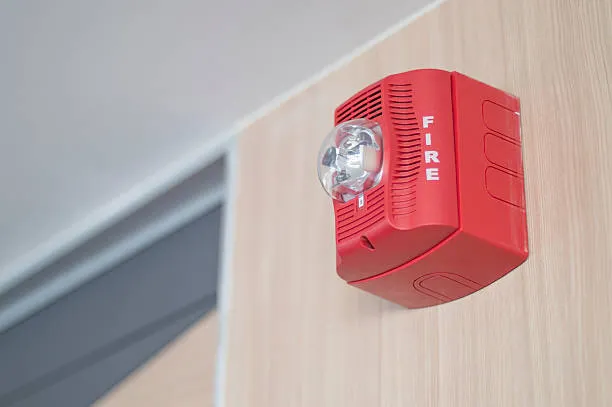
If you own or manage a commercial property in the Greater Houston area, fire alarm system installation is not optional — it is a code requirement enforced by your local fire marshal and driven by NFPA 72, the National Fire Alarm and Signaling Code. Whether you are building new, renovating, or replacing an aging system, understanding how the process works will help you avoid delays, failed inspections, and unexpected costs.
Who Requires a Commercial Fire Alarm System in Texas?
Texas follows the International Fire Code and NFPA 72 for fire alarm requirements, with local amendments enforced by the Authority Having Jurisdiction (AHJ) — typically your city or county fire marshal. In the Houston metro, any of the following typically requires a licensed fire alarm installation:
- New commercial construction over a certain occupancy threshold
- Change of occupancy or use of an existing building
- Renovations that exceed a percentage of the building’s value
- Buildings housing specific occupancy types — healthcare, education, multifamily, assembly, or industrial
- Replacement of a system that has failed or reached end of life
The specific thresholds depend on your building type and local fire code. Your fire alarm contractor should pull the permit, verify the applicable code edition, and coordinate directly with the AHJ — that is part of what you are paying for.
Types of Commercial Fire Alarm Systems
Not all fire alarm systems are the same. The right system depends on your building’s size, occupancy type, and budget. The most common configurations are:
- Conventional systems — Older technology where devices are wired in zones. When an alarm triggers, you know the zone but not the exact device. Common in smaller buildings.
- Addressable systems — Each device has a unique address, so the control panel identifies exactly which detector or pull station activated. Required for larger buildings and strongly preferred for most commercial applications.
- Hybrid systems — Combine conventional and addressable components, often used during phased upgrades.
Contractors in our network install Silent Knight and FireLite systems, two of the most widely trusted brands in commercial fire alarm. Both have strong local service support and are fully NFPA 72 compliant.
The Installation Process, Step by Step
A commercial fire alarm installation typically follows this sequence:
- Site assessment and system design — A licensed technician walks the building, reviews plans, identifies device placement, and creates a design that meets NFPA 72 and local code requirements.
- Permit application — Your contractor submits plans to the AHJ for review and approval before any work begins. In Houston, this goes through the city permitting office or county, depending on jurisdiction.
- Rough-in wiring — Conduit and cable are run throughout the building. In occupied buildings, this work is often staged to minimize disruption.
- Device installation — Detectors, pull stations, horn/strobe notification appliances, and the control panel are installed per the approved plans.
- Programming and testing — The system is programmed, each device is individually tested, and the full system is verified against the record of completion.
- Acceptance testing with the fire marshal — A final inspection is conducted with the AHJ present. Upon passing, you receive your certificate of occupancy clearance.
How Long Does Commercial Fire Alarm Installation Take?
Timeline depends heavily on building size, whether the building is occupied, and how quickly permits move through your local AHJ. A straightforward installation in a small commercial space may take two to three days of field work. A multi-story building with complex wiring runs can take several weeks. Permit review times in Harris County and Houston vary — plan for two to four weeks for permit approval in most cases.
Choosing a Qualified Fire Alarm Contractor in Houston
Texas requires fire alarm contractors to hold a license issued by the State Fire Marshal’s Office. When hiring, verify:
- The contractor holds an active Texas fire alarm license
- Technicians are NICET certified or have equivalent demonstrated experience
- The contractor has experience with your occupancy type — healthcare, warehouse, and multifamily all have distinct requirements
- The contractor pulls the permit themselves, rather than asking you to handle it
- References from similar commercial projects in the Houston area are available
Our network includes licensed fire alarm contractors serving Humble, Kingwood, The Woodlands, Spring, Conroe, Tomball, and surrounding communities throughout North Houston.
After Installation: Ongoing Inspection Requirements
Installation is only the beginning. NFPA 72 requires annual fire alarm inspection and testing once the system is in service. Texas fire marshals and local AHJs enforce this requirement, and failing to maintain current inspection records can put your certificate of occupancy at risk. A good contractor will help you establish an annual testing schedule and provide the documentation your building needs.